In the Sunday Times bestseller The Science of Storytelling, author Will Storr cites research showing that when we read stories, our brains release chemicals like oxytocin and dopamine. These chemicals help us focus, engage, and remember what we read.
That matters for one reason: Attention is hard to earn and even harder to keep.
Thanks to AI, content is easier to produce at scale. The result? More content that sounds the same, reads the same, and gets ignored.
So what still works?
Your story.
And the stories of the clients you’ve helped achieve real results. These are naturally unique because no two experiences are the same.
Effective storytelling is the lifeblood of capturing and holding attention. In the upcoming section on creating persuasive marketing campaigns, I'll dive deep into how to use storytelling, offering numerous examples to drive the point home.
But first, let’s get something straight: Testimonials are not enough
Here's a Fiverr screenshot. For $20, the seller offers to produce a video testimonial, posing as a satisfied customer. Once I pay the $20, he'll even claim that my laxatives made him look 20 years younger or that I taught his cat Mandarin in just 5 minutes.
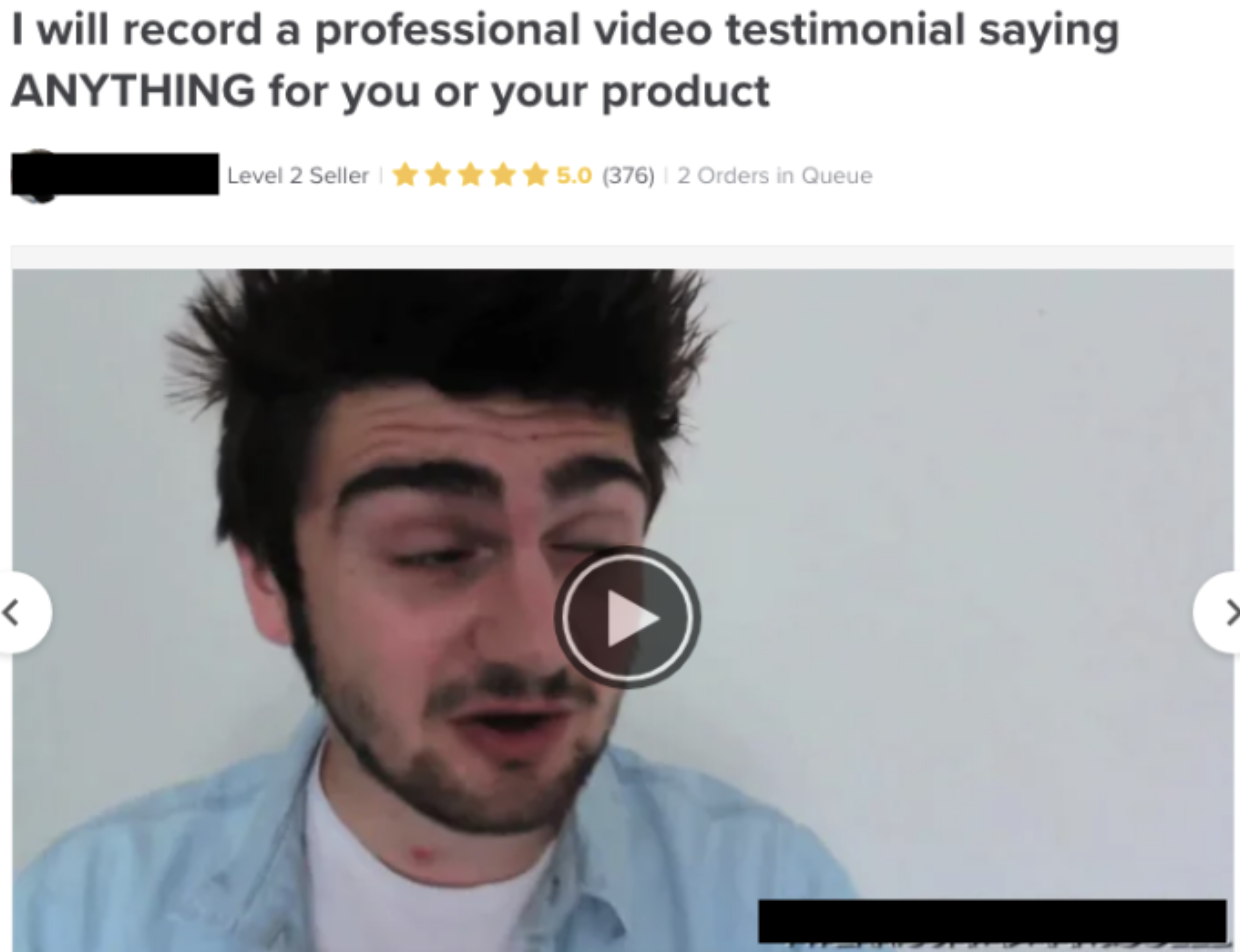
In a TV show investigation, Inside Edition exposed a Fiverr seller who posed as a doctor, lawyer, and teacher, creating a series of fake video testimonials.
Having testimonials on a website doesn't automatically make the average reader believe in the claims. That's why, when I wrote a blog post for Copyhackers about helping a client achieve 3,118 opt-ins at £0.54/lead in 7 days, I didn't just make a claim. Instead, I detailed my entire process, essentially saying to the internet, "Feel free to replicate my results; no thank you required."
I established credibility by educating the audience on how I achieved a specific result. More people will share and read credible content.
The Principles of Effective Storytelling
1.Be Specific
For over 20 years, Professor Dan and Chip Heath from Duke and Stanford University have studied what makes some messages more effective than others in capturing and retaining attention and increasing the likelihood that people will take action.
In their book "Made to Stick," they explained that being concrete and specific makes it easier for people to understand and respond to a message.
In one example from the book, researchers Shedler and Melvin Manis conducted an experiment at the University of Michigan in 1986. They had participants act as jurors in a made-up trial to decide if "Mrs. Johnson" should keep custody of her 7-year-old son. The jurors heard arguments both for and against custody, presented in these ways:
Arguments for custody without specific details.
Arguments against custody without specific details.
Arguments for custody with specific but unrelated details, like the child using a Darth Vader toothbrush.
Arguments against custody with specific but unrelated details, such as a nurse staining her uniform when cleaning the child's scraped arm.
The result? Jurors tended to favor the argument with vivid details, even if unrelated to Mrs. Johnson's fitness for custody. This experiment highlights the impact of storytelling. Dan and Chip Heath noted, "By making a claim tangible and concrete, details make it seem more real, more believable."
To be specific, avoid using abstract language. The following principle will help you with this.
2. Language is abstract, but life is not
Both the Holiday Inn, at $60/night, and the Ritz Carlton, at $500/night, claim to offer good service. However, simply saying "good service" doesn't explain why one hotel's service is superior. On the other hand, the story of a manager at Ritz-Carlton Bali arranging special eggs and milk flown from Singapore by his mother-in-law for a guest helps me visualize the elevated service experience at the Ritz-Carlton.
A tip to make your copy more specific and concrete is to write the way you talk to a friend.
A few years ago, I booked a hotel room in London but ran into trouble when I got there. I mixed up the dates and booked for the day I was leaving, not arriving.
It was nighttime, and most hotels were full with a major sports event in town. I wandered from hotel to hotel until I mistakenly entered a company lobby with my suitcase. When I ask about a room, the security guard looks confused and says, "This isn't a hotel; it's a company."
When talking to a friend over coffee, I'll share the vivid details above, including how I asked the company about room availability. Instead of saying, "A mishap in London led to a nocturnal odyssey for lodging, shattering the illusion of accommodation."
Examples of Persuasive Business Storytelling
Storytelling in Social Media Posts
Many marketers complain that organic reach on Linkedin in 2026 is down and that organic engagement is hard to come by.
I came across a story about a US professor who rented an Airbnb room in London only to find it was a bathroom with a bed. Inspired by this, I used this story as an analogy in a LinkedIn post, explaining the process I used to help an SEO expert get better results from his ads.
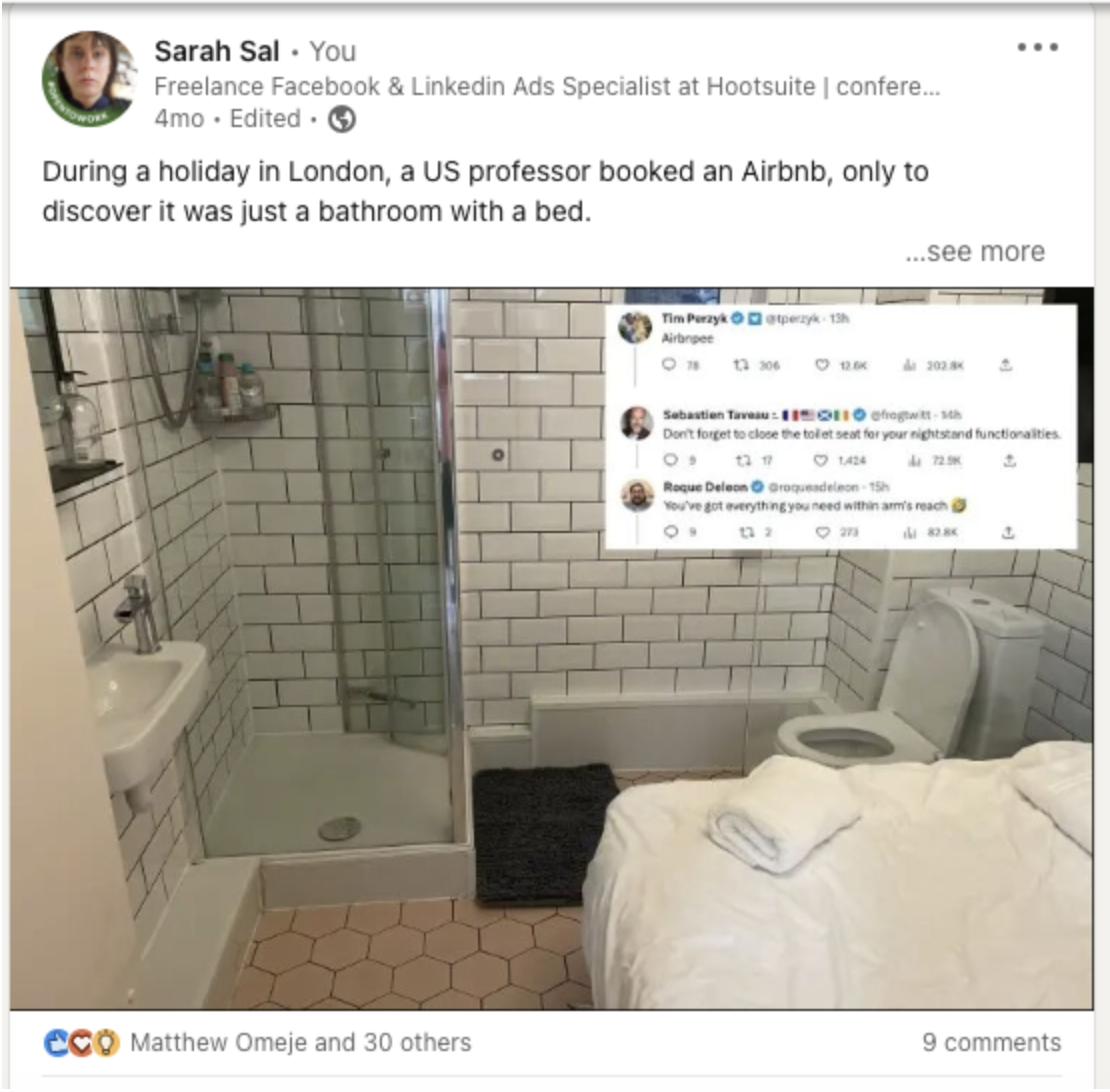
The result?
My profile has 2321 followers, and my post got 2163 impressions, which is great in terms of organic reach.
Storytelling in Sales Pages
Having a compelling copy on my website truly saved my ass after Facebook banned my fan page with 4.3k followers because I wrote a blog post comparing Apple and FB to two drag queens fighting for the last lipstick on Earth.
I could've made a new fan page or dealt with FB support, but I chose not to bother since my website attracted clients searching for a Facebook ads expert on Google.
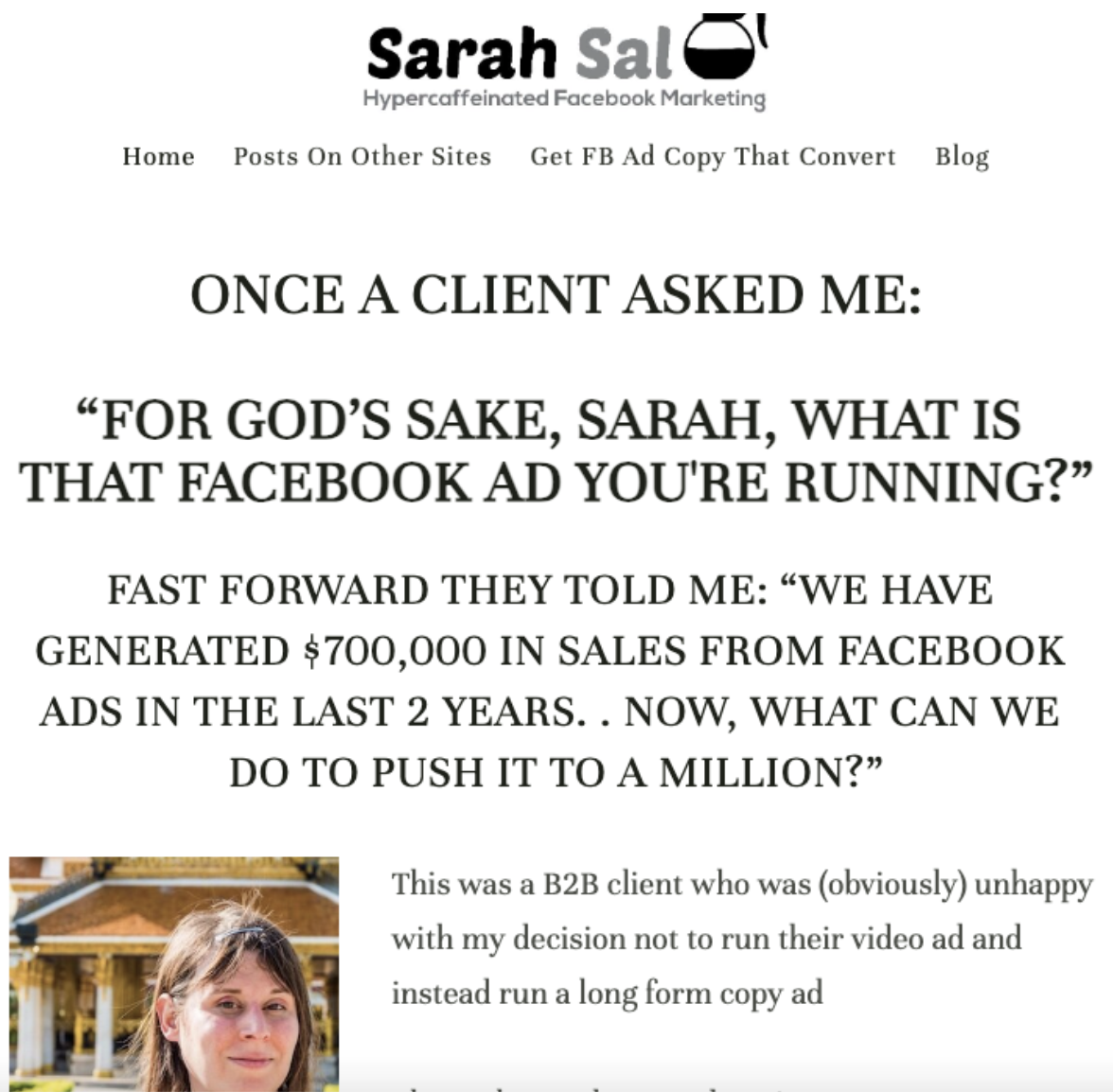
The copy on my home page tells the story of a client who was initially unhappy with my use of storytelling in their ads but later told me my work generated $700,000 in sales, and they asked if I could push it to $1 million.
Storytelling and email marketing
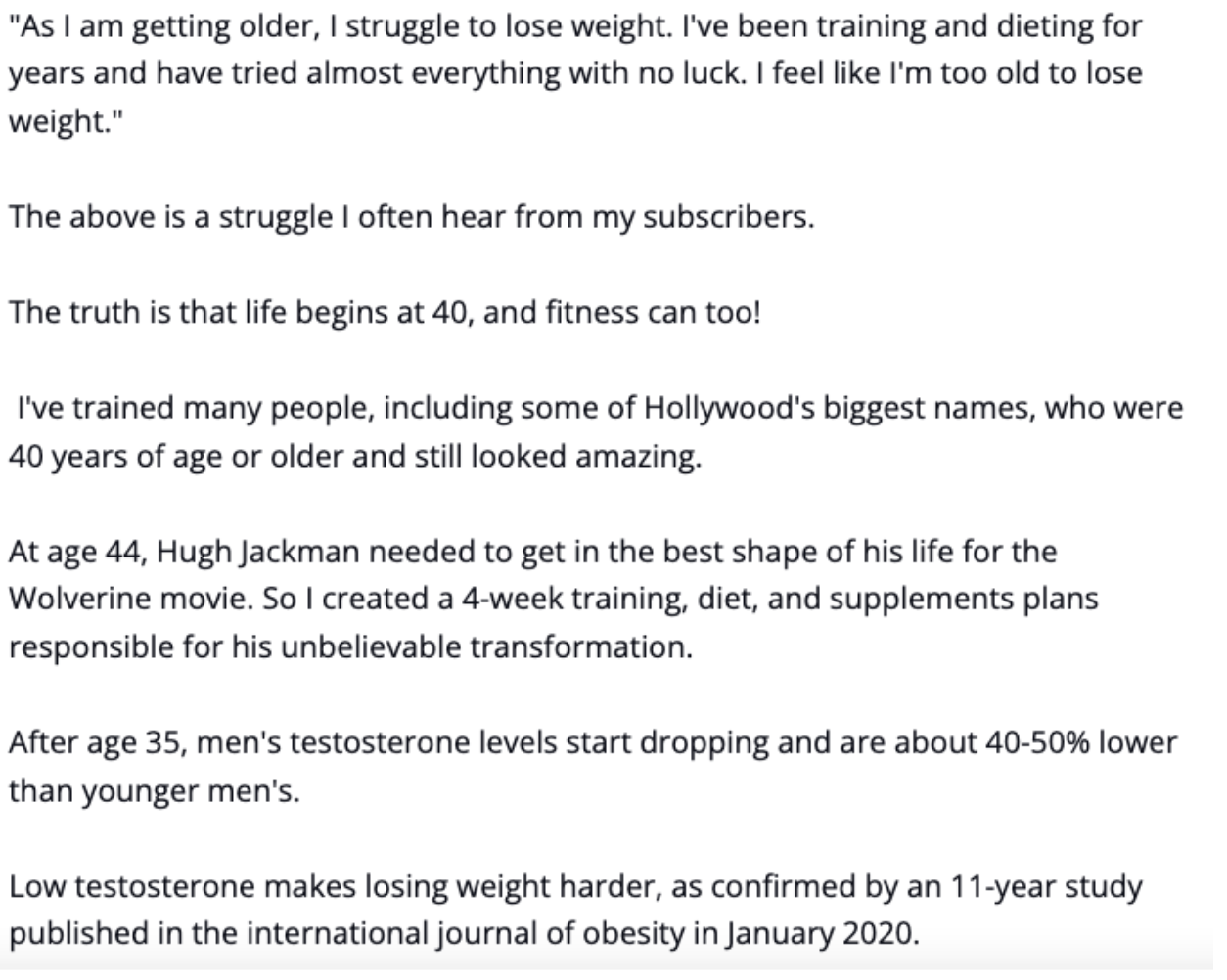
Earlier this year, I had celebrity personal trainer David Kingsbury as a client. The email sequence I crafted boosted the ROI from his Facebook ads, turning it from 1X to over 7.08X.
The secret?
Instead of writing emails blindly, I sent a survey to David's email list to understand their struggles. So, I wrote an email explaining how David assisted Hugh Jackman in getting in shape at the age of 44. (screenshot of the email opening below)
Storytelling in advertising
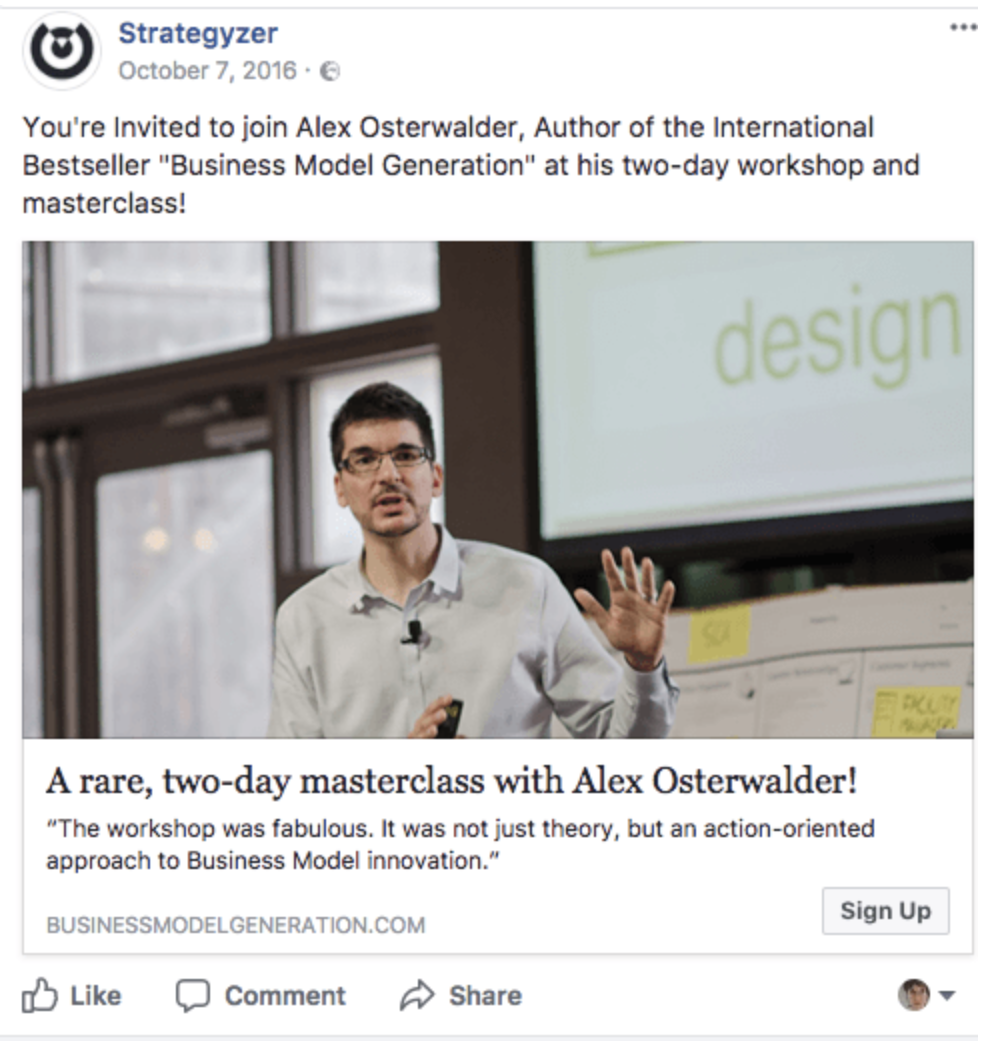
When I began running ads for Strategyzer, they made $0.40 for every $1 spent. With my help, they started earning $18.66 for every $1 spent on ads.
Below is what their ads looked like when they were losing money.
How did I turn the campaign around?
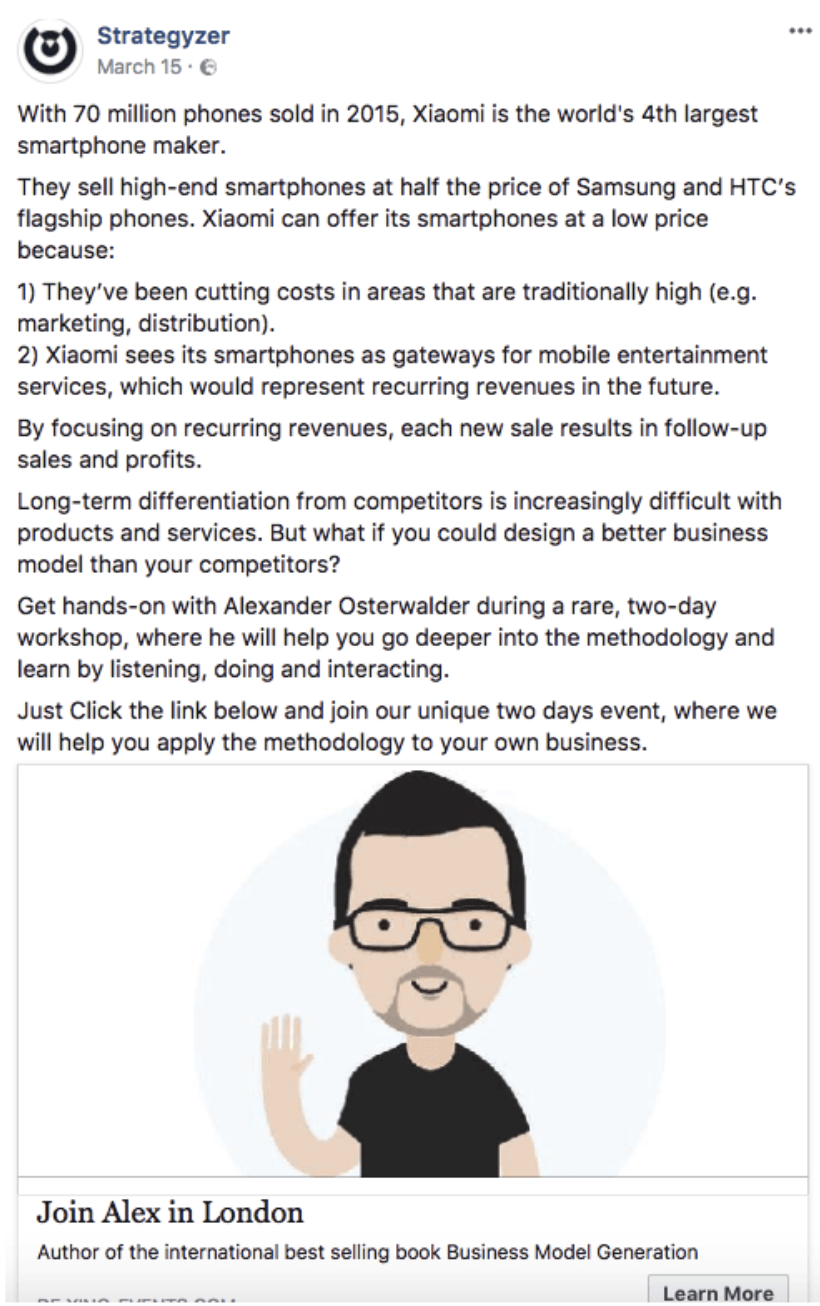
I studied Strategyzer's content, case studies, and business stories. I used storytelling to write ads that gave the users a taste of what they'd learn attending their conference. Here is an example of one of the ads I ran for them:
The best ads don't look like an ad. With 37% of internet users using ad blockers, it's evident that people dislike ads. Even when technology does not block an ad, our brains are programmed to ignore anything that resembles an ad.
I write ads that don't look like ads by focusing on educating the reader instead of making big claims.
Below is an ad I wrote that uses an engaging story as an analogy.
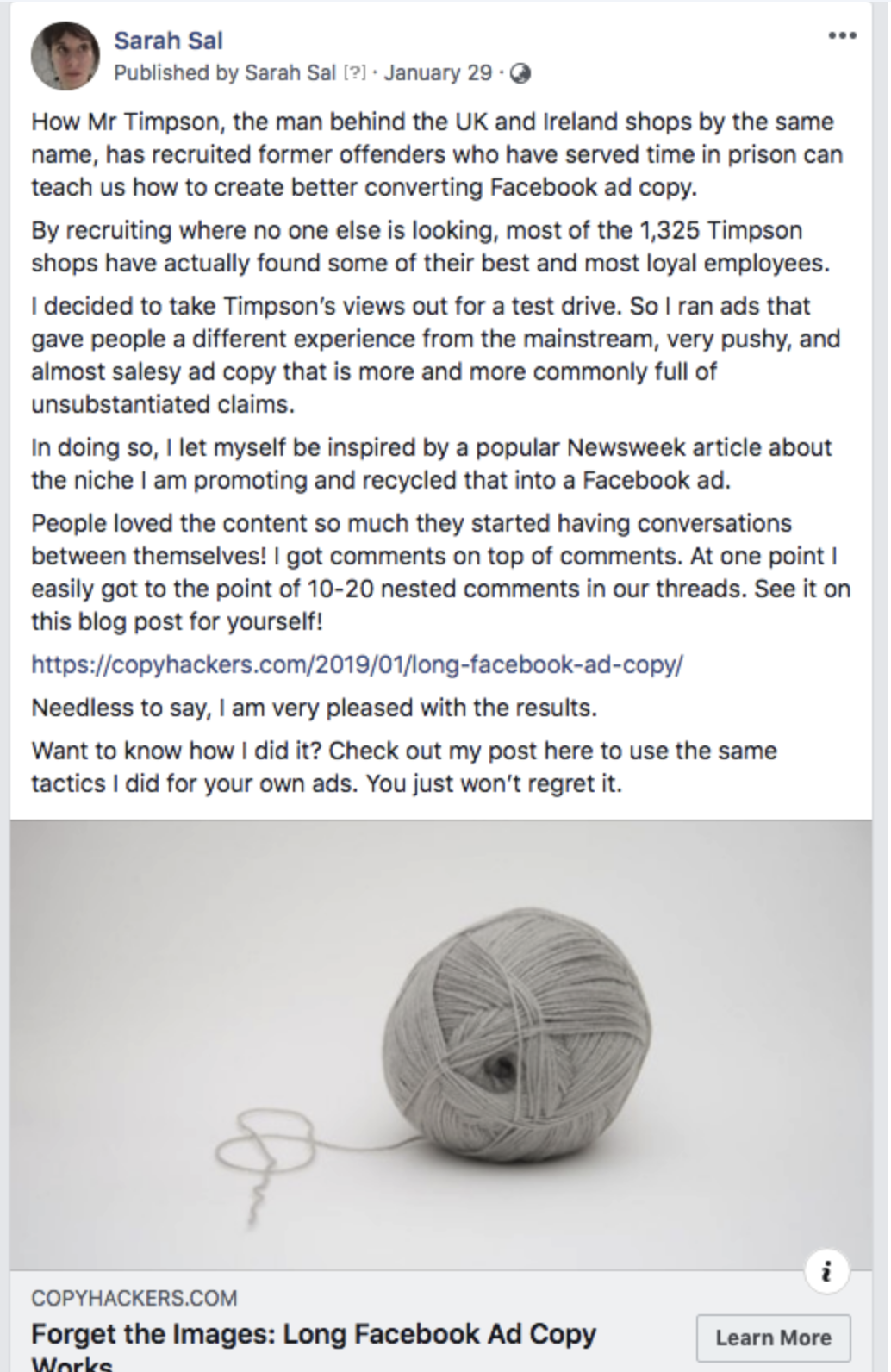
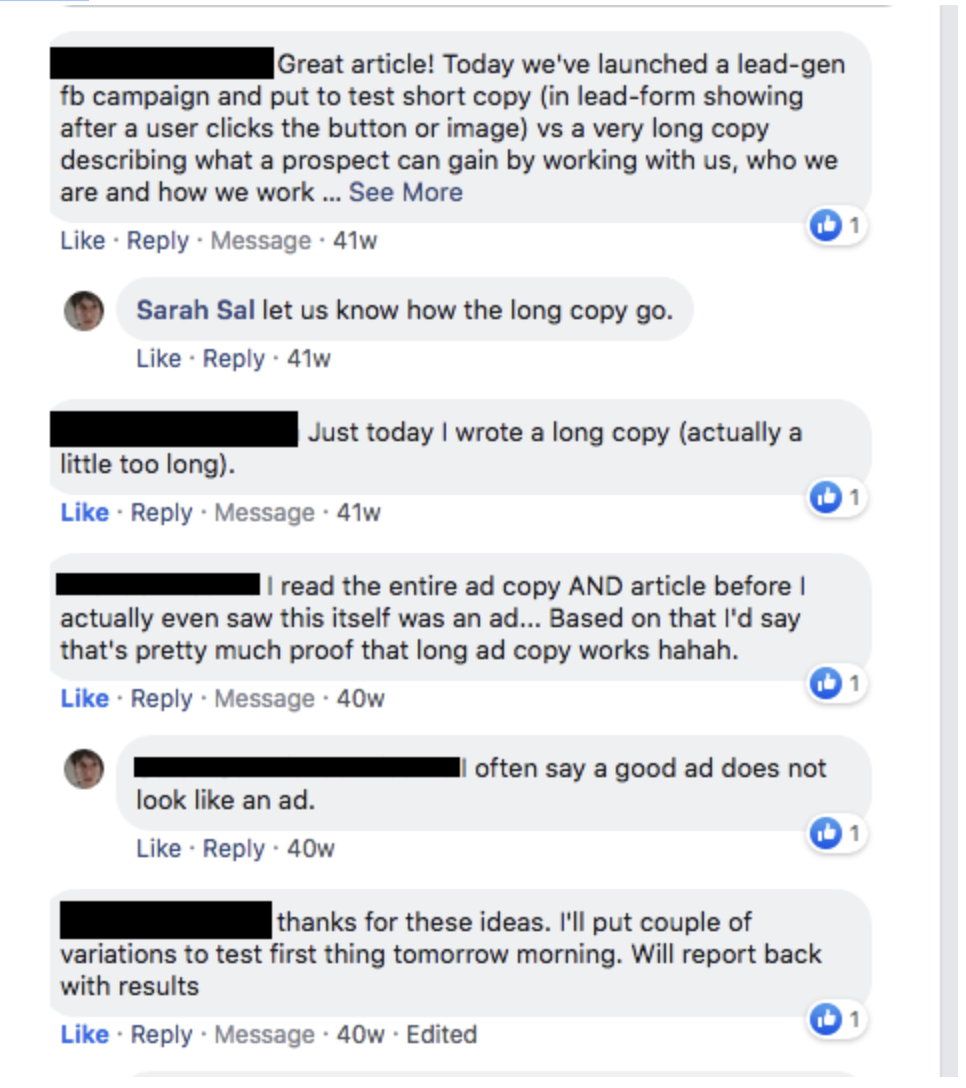
Notice In the comments section how someone said they read the ad without even noticing it was an ad.
Where to get inspiration from
By now, we know that storytelling and analogies are powerful tools for capturing an audience's attention. But how on earth do I know which story to tell my audience?
Below, I compiled a few examples of where I get my inspiration from.
Daily life
In 2019, an airline made me miss a connecting flight and did not give me a hotel for the night. So I ran $10 of ads on LinkedIn ads and got them to fix the situation.
Later, I turned that experience into a blog post that positioned me as a LinkedIn ad expert and was shared 1300 times. The truth is that every day in our life is full of experiences that we can turn into content by finding an analogy with a teaching value to it.
For example, Celebrity copywriter Laura Belgray shares in an email the story of her brother-in-law, Dan, who often sends dishes back at restaurants. She uses this to convey a broader message:
"Every great chef has someone who sends their food back. Remember: there's always going to be a Dan, someone who doesn't like it and wants it to be something else. It doesn't make you any less great."
The diary of a client
Imagine you stole a client's diary; what would it say about you and the product and service you sell?
I first heard of this exercise at a 3-day writing workshop by Laura Belgray in Cinque Terre. Unbeknownst to me at the time, I utilized this exercise to write what later became the homepage of my website.
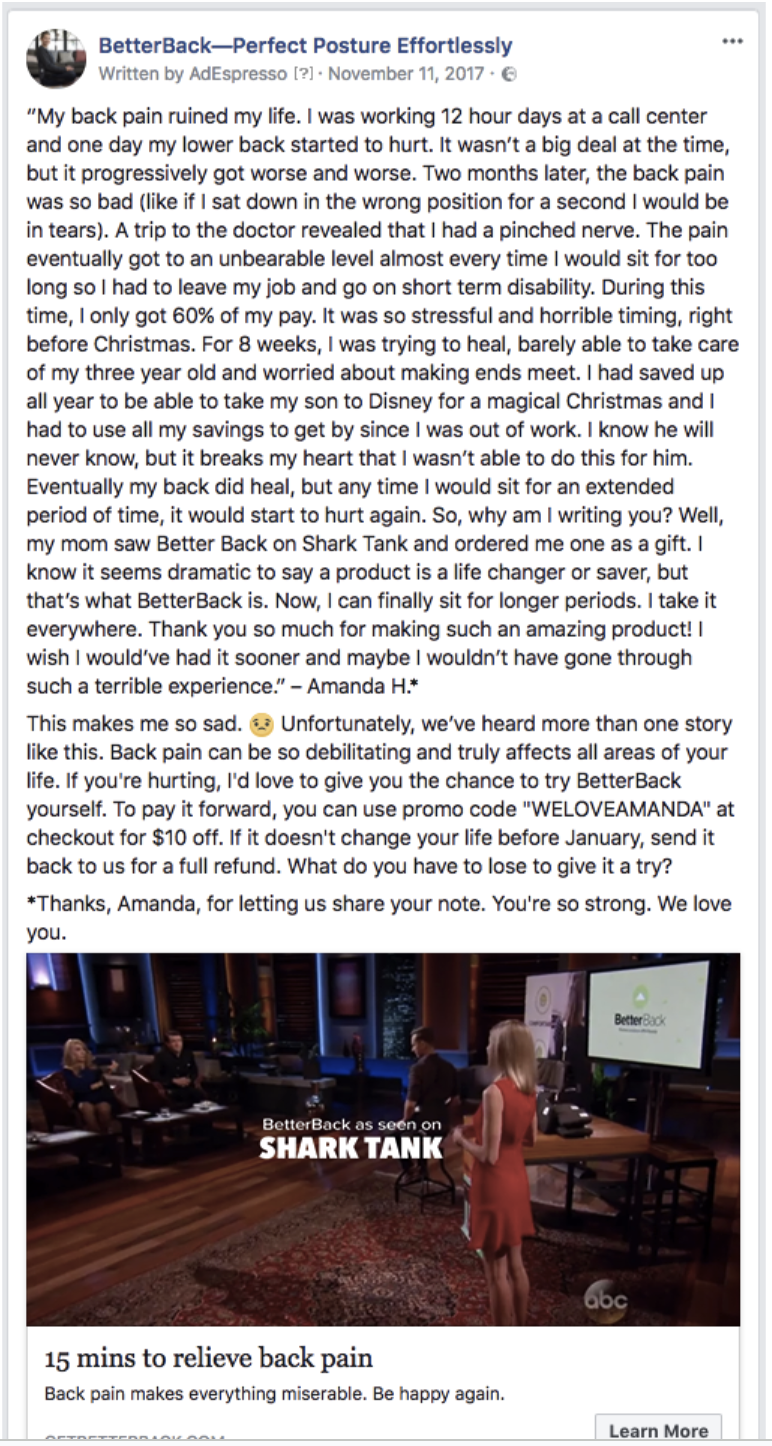
A few years ago, I had a client that was part of the Shark Tank TV show. When Facebook ad costs rose, their ads stopped being profitable.
I helped them craft ad copies that read like a client's diary. As a result, their ads became profitable again, and they achieved the highest number of sales in a single day from FB ads.
Check out a screenshot of one of those ads below.
Interview your clients
Your clients probably have amazing stories about how your product has helped them. Unless you talk to them, these stories might remain undiscovered.
When I wrote ads for The Copywriter Accelerator course, I conducted in-depth 30-60-minute interviews with past students on Zoom. I chose interviews over surveys or emails because I wanted to go deep and ask follow-up questions.
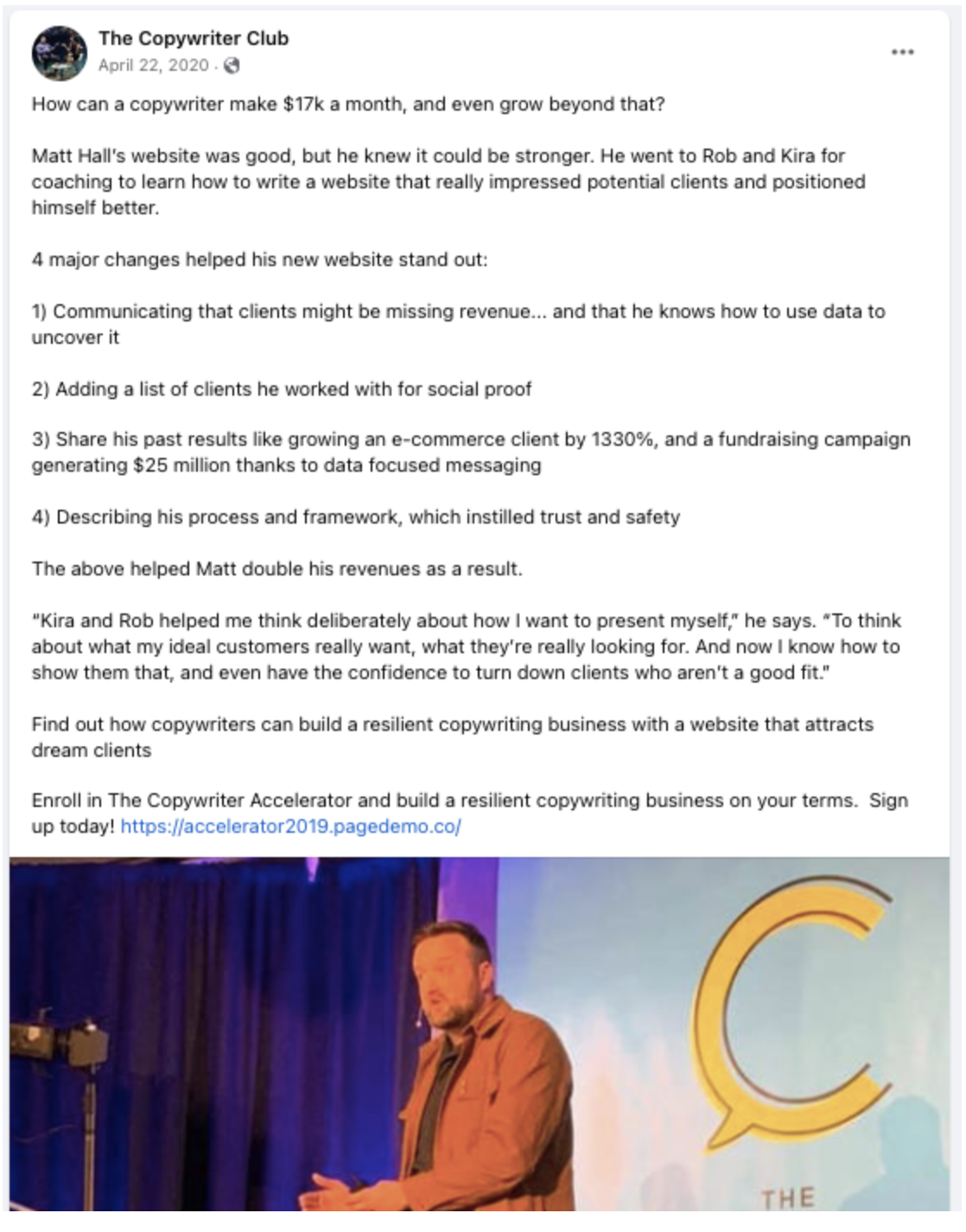
For instance, in my interview with Matt Hall, he mentioned the course helped him earn $17k/month. Naturally, I asked how, and Matt explained, "They helped redesign my website." I then had him compare his old and new websites side by side, pointing out the specific changes that made his website more persuasive.
The result? The Facebook ads delivered a remarkable ROI of 1,280%. Below, you'll find an example of one of these ads.
Reddit and discussion forums
"Keeping a job is the toughest challenge I've faced," I came across this statement on Reddit while researching Asperger's for writing ads.
To better understand issues faced by those with Asperger's, I decided to spend a few hours reading about the topic on Reddit, as I wanted to craft ads that scream, "I see you. I get it."
In my research, I discovered that Asperger's affects social communication skills, like understanding non-verbal cues, tone of voice, and sarcasm. These challenges can lead to misunderstandings and frustration.
If I needed to write ads on the New York rental market, I'd type into Google" rental nightmare New York Reddit," and many results about the struggle of renting in NYC would show up.
Reddit and discussion forums are gold mines when it comes to customer research. Good copy is 90% reading and listening and 10% writing.
Comments from the targeted audience
In September 2021, Anorak, an insurance broker offering income protection insurance, hired me as their Facebook ads expert due to their high cost per lead.
To understand what people thought about income protection insurance, I checked the comments on their ads. I observed skepticism about insurance companies paying out claims and a belief that UK unemployment benefits made such insurance unnecessary.
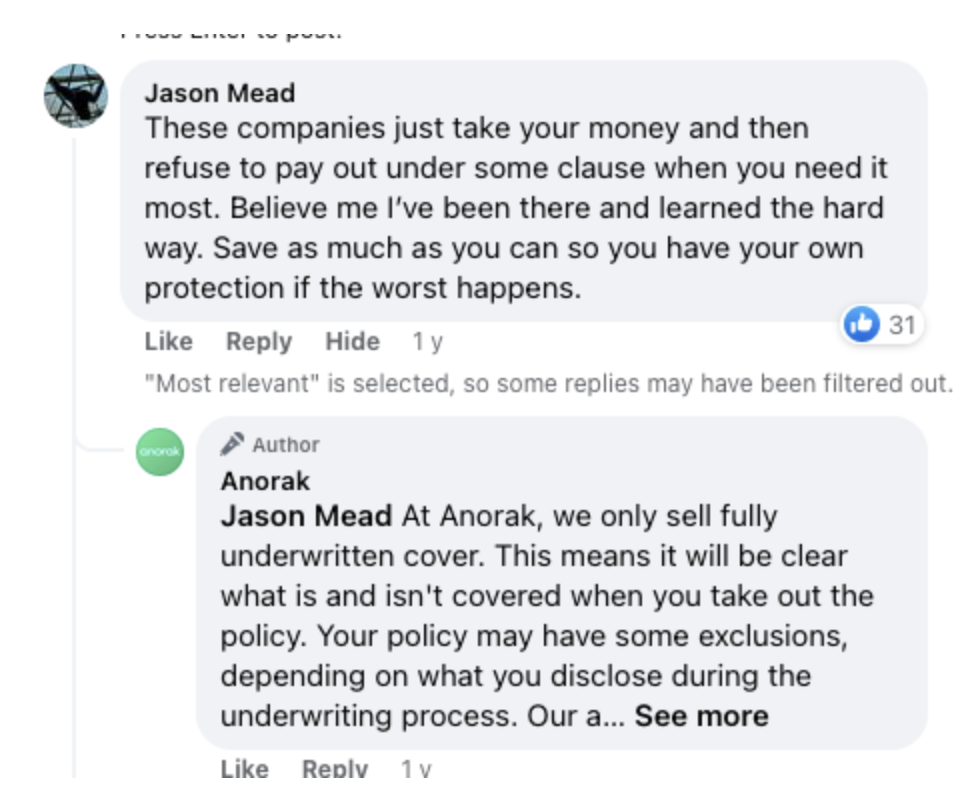
Armed with the newfound insights, I advised Anorak to create ads addressing the audience's objections and concerns. The outcome? I wrote a case study detailing how I helped them reduce the FB ads CPA by a remarkable 5.1X, ultimately saving them over $1.5 million in ad spend.
Responses to your emails, blog comments, and social media comments (both organic and paid) are like finding gold nuggets. They give you a peek into what's on the minds of your target audience.